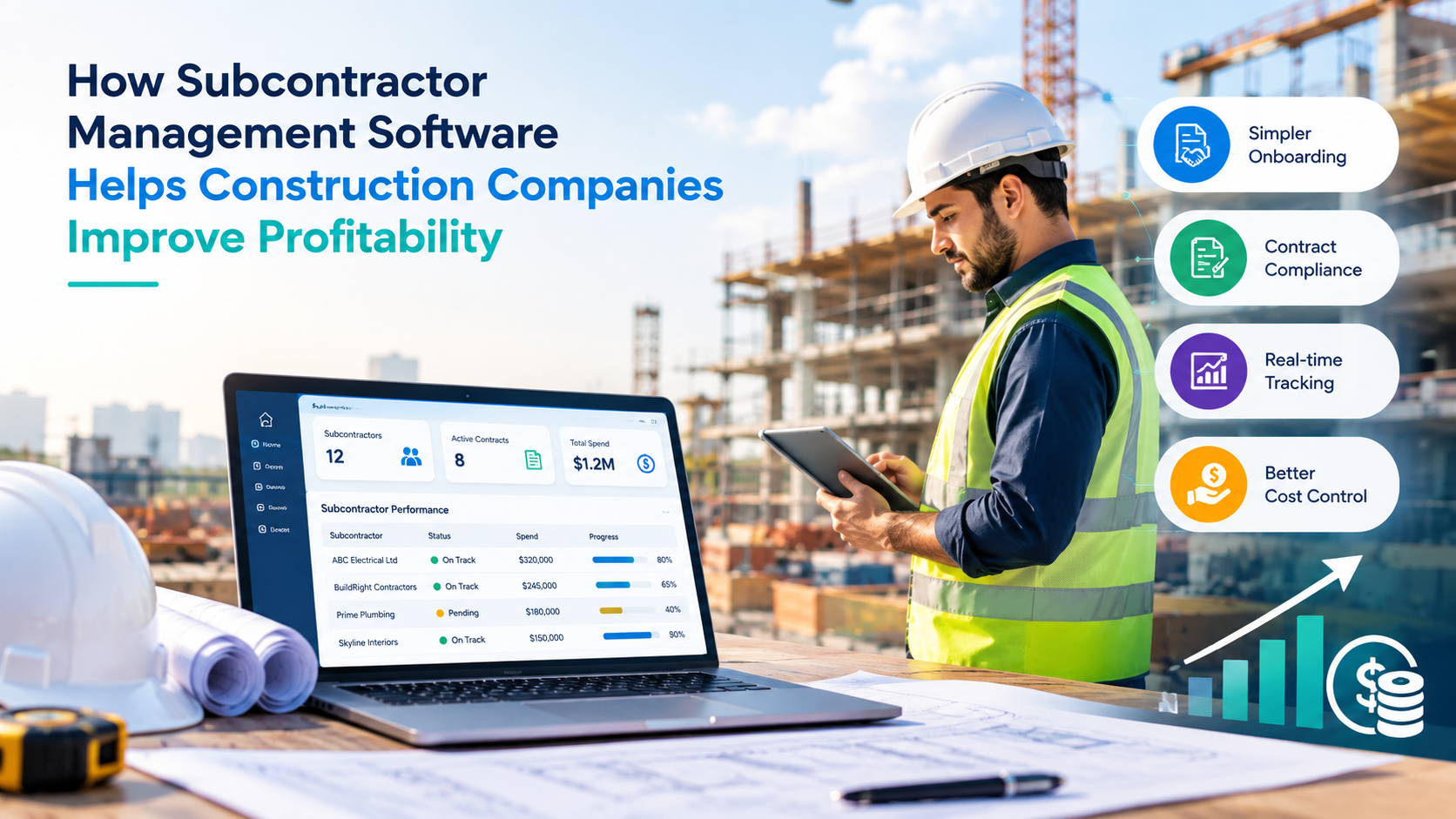
The construction industry in the UAE operates in a highly competitive environment where tight deadlines, complex project requirements, and rising costs can directly impact profitability. While contractors focus on delivering projects on time and within budget, managing multiple subcontractors often becomes a significant challenge. Delays in communication, incomplete documentation, and poor visibility in subcontractor performance can quickly affect project outcomes.
This is where subcontractor management software plays an important role. By providing a centralized platform for managing subcontractor activities, documentation, communication, and performance, construction companies can improve efficiency and protect their profit margins.
Why Subcontractor Management Matters in Construction
Most construction projects involve multiple subcontractors responsible for specialized tasks such as electrical work, plumbing, HVAC installation, roofing, and finishing work. Coordinating these teams manually through spreadsheets, emails, and paper documents can create unnecessary complexity.
Common challenges include:
Without a structured process, these issues can increase project costs and reduce profitability.
Improved Visibility Across Projects
One of the biggest advantages of subcontractor management software is real-time visibility in subcontractor activities.
Project teams can monitor:
Having access to up-to-date information allows contractors to identify potential delays early and take corrective action before they impact the project schedule.
Better visibility also helps management make informed decisions that support project profitability.
Better Communication and Collaboration
Communication breakdowns are one of the leading causes of project delays. When multiple subcontractors are involved, important updates can easily get lost across emails, phone calls, and messaging applications.
A centralized software solution enables all stakeholders to access project-related information from a single location. Drawings, schedules, change requests, and project updates can be shared quickly and efficiently.
Improved collaboration helps ensure that subcontractors remain aligned with project objectives, reducing misunderstandings and costly rework.
Stronger Compliance and Documentation Control
Construction companies in the UAE must comply with various contractual, safety, and regulatory requirements. Managing subcontractor documentation manually can be time-consuming and prone to errors.
With subcontractor management software, companies can store and track:
Automated alerts can notify project teams when documents are approaching expiration, helping reduce compliance risks and administrative workload.
Project delays can significantly impact profitability. Missed deadlines often result in increased labor costs, extended equipment usage, and potential contractual penalties.
A digital subcontractor management process allows project managers to:
This level of control helps construction teams keep projects moving forward and minimize disruptions.
Profitability depends on maintaining control over project expenses. When subcontractor costs are not tracked accurately, budget overruns can quickly occur.
Modern subcontractor management software provides detailed insights into:
This information helps contractors compare actual costs against budgets and identify opportunities to improve financial performance.
Accountability is essential when multiple subcontractors are working on the same project.
A centralized system creates a clear record of:
This transparency helps reduce disputes and ensures that subcontractors remain accountable for their deliverables.
Supporting Long-Term Business Growth
As construction companies expand, managing subcontractors through manual processes becomes increasingly difficult. Scalable digital solutions allow businesses to handle larger projects and more subcontractors without increasing administrative complexity.
Companies that invest in structured subcontractor management processes often experience:
These benefits contribute to sustainable business growth and stronger competitiveness in the market.
Managing subcontractors effectively is critical to the success of construction projects. Poor coordination, limited visibility, and inefficient processes can lead to delays, compliance issues, and unnecessary costs.
By implementing subcontractor management software, construction companies can improve communication, strengthen compliance management, increase accountability, and gain better control over project performance. These improvements ultimately support stronger profitability and more successful project delivery.
Ready to simplify subcontractor management and improve project profitability?
Discover how ProjectPro, helps construction companies streamline subcontractor coordination, improve project visibility, and maintain greater control over project operations. Contact our team today to learn more.


