web
You’re offline. This is a read only version of the page.
close
Skip to main content

Announcements

News and Announcements icon
Community site session details

Community site session details

Session Id :
Dynamics 365 Community / Forums / Sales forum / Sales Professional vs ...
Sales forum

Sales Professional vs Sales Enterprise - Instances and Upgrade?

(0) ShareShare
ReportReport
Posted on by 4

Hi everyone,


I am getting very mixed messages from the licensing guide:  https://go.microsoft.com/fwlink/?LinkId=866544&clcid=0x409 to MVP articles stating conflicting information so I am asking this group to see if any experts know the correct answers:

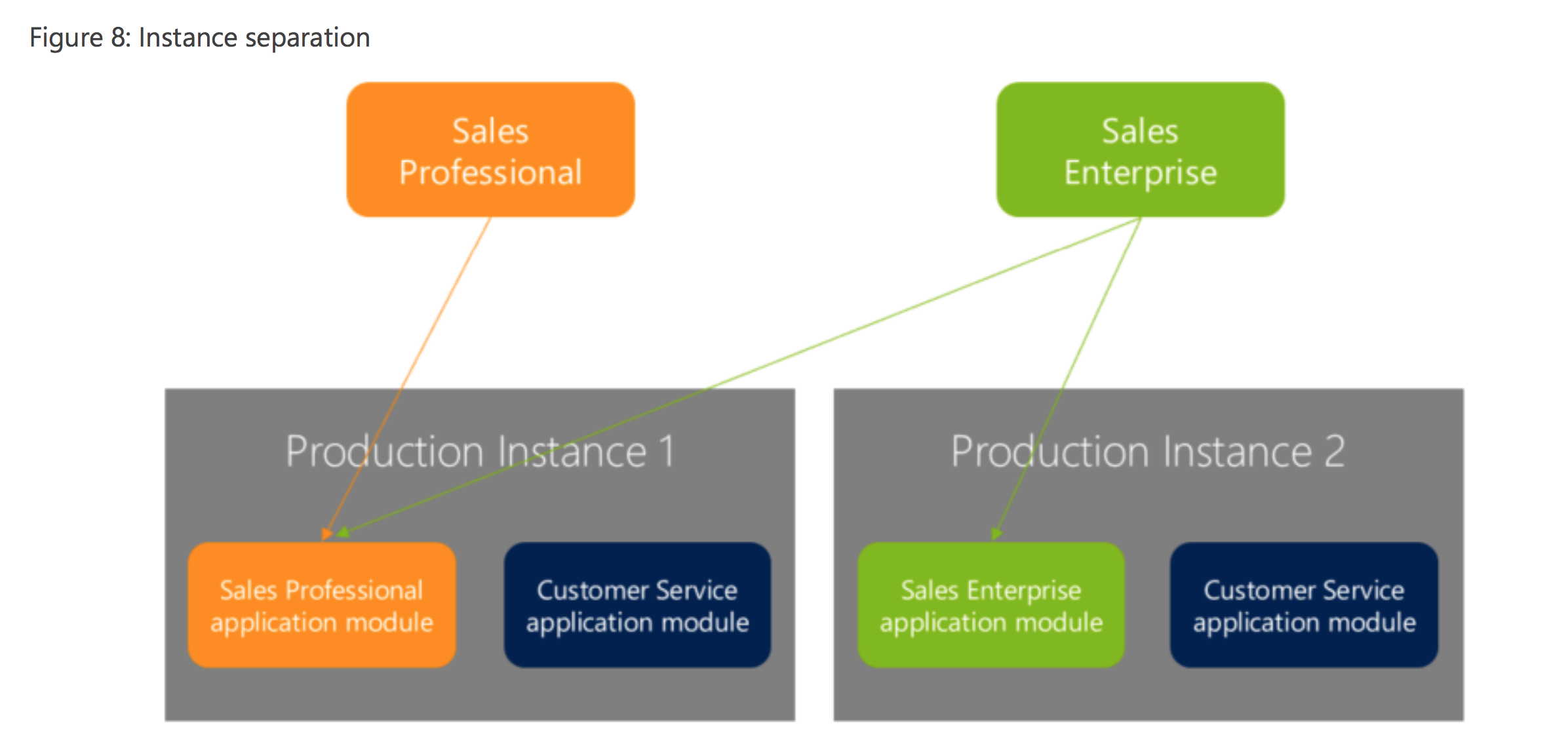
1.  Sales Professional vs. Sales users - According to the licensing guide these can not coexist in the same instance of Dynamics 365.  Is this really accurate?  This would be a very tough sell in my opinion and you are either "all in" on a Professional license or "all in" on the Sales enterprise license.  Main question that I need clarification. Is this really where Microsoft is at with this that they need to be in separate CRM instances?
Screen-Shot-2018_2D00_06_2D00_07-at-6.37.52-AM.png

2.  Upgrade - So, if you do have all the users in your organization as "Professional" users and #1 is accurate that they need to be in separate instances, what happens when we upgrade to be all Enterprise Users?  Is it an instance level that they can then "upgrade" this or do you need to migrate to another instance?  Any ideas on this?

Thanks much!

I have the same question (0)
  • Suggested answer
    Ben Thompson Profile Picture
    6,350 on at

    1) The restrictions placed on the Sales Professional licence are all system level restrictions (number of custom entities (15), forms allowed (2), workflows (15), business process flows m(15)) so if you have a Sales Professional restricted system there would be zero reason for any user just using that instance to have an Enterprise licence.  Hence the 2 instance diagrams you show above. stevemordue.com/dynamics-365-sales-professional-license has a good overview of this.

    2) I suspect that the current licence methodology is honesty based and that there are currently no actual limitations configured within the system. Going forward that may change but even then an upgrade to full licences would probably be a straightforward task of just getting support to remove the hidden limitation solutions from the instance.

    Of course if you had 2 instances in operation (one professional, one enterprise) merging everything into a single instance would be hard work. However, I suspect if you were using the architectural design above you would already have something (scribe, kingswaysoft, Flow) keeping the data in sync. Especially as I suspect such requirements synchronisation tasks will become increasingly common as limited functionality powerapps become more widespread.

    Saying all that the idea that you need seperate instances is utterly horrendous on a design front. However I do wonder how many companies will have a combination of Professional and Enterprise licences, I suspect for most companies the cost of another production instance would remove any savings made..

  • Drew Poggemann Profile Picture
    4 on at

    Thanks for the feedback Ben, you and I are on the same page with what I expected.  

    The funny thing is that when I mentioned that an MVP was saying something different, this is the exact article I was referring to that is contradictory!  Steve identifies that it is not two different instances but a single instance.  I even added feedback to his article and he came back and said that the information in the licensing guide that shows two instances is not accurate, see snippet below with my comments (from that article).

    instances.PNG

    Hopefully Microsoft will reply on this or I will have to call them to get clarification.

  • Verified answer
    Drew Poggemann Profile Picture
    4 on at

    I have been on the phone with Microsoft today for an hour and they did clarify (with their product team) that the Professional and Enterprise Sales licenses are DIFFERENT INSTANCES, not the same instance.  They can be in the same tenant of course but that doesn't mean much in the CRM world.  You can not mix and match users with the different licenses in the same instance.  The May licensing guide documentation is correct on this.

    Upgrade, you cannot just migrate an instance to an Enterprise instance from a Professional instance either.  This would be a data migration to the enterprise environment (not just an instance copy).  I gave my feedback on this and Microsoft identified it is a known issue.

    Thanks,

  • Verified answer
    gvrijdag Profile Picture
    45 on at

    This last status quo is gone again for me, when I read the comments made in July 2018 regarding this matter on the article in docs: docs.microsoft.com/.../upgrade-sales-professional-sales-enterprise. See also the feedback at the bottom.

    Cheers, Guido

  • Drew Poggemann Profile Picture
    4 on at

    Awesome!  Looks like upgrade is now possible without data migration.  This was a must and glad they accomplished.  

Under review

Thank you for your reply! To ensure a great experience for everyone, your content is awaiting approval by our Community Managers. Please check back later.

Helpful resources

Quick Links

November Spotlight Star - Khushbu Rajvi

Congratulations to a top community star!

Forum Structure Changes Coming on 11/8!

In our never-ending quest to help the Dynamics 365 Community members get answers faster …

Dynamics 365 Community Platform update – Oct 28

Welcome to the next edition of the Community Platform Update. This is a status …

Leaderboard > Sales

Last 30 days Overall leaderboard

Featured topics

Product updates

Dynamics 365 release plans